







 |
|
|||||||||||||||
 |
||||||||||||||||










 |
Gregory J. Hanson Tucson,Arizona
I spent my early years in Michigan's Upper Peninsula. This was followed by 37 years in Wisconsin before spending two years in southern California and most recently arriving inTucson, Arizona after spending eight years in Portland, Oregon
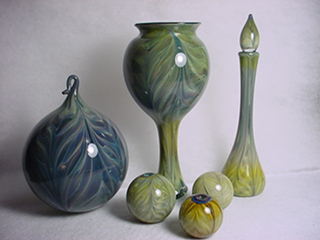
I am primarily known as a glass lampworker. Working with a specialized torch - a GTT Delta Elite- and borosilicate (PyrexTM) glass tubes and rods, I create blown beads, Christmas ornaments, goblets, and perfumes and solid forms, such as, paperweights, cabochons, paperweight buttons, and marbles. I am a self-taught, home studio lampworker. My fascination with glass began in the early 1970s while a student in Europe. A focus of my European studies involved the history/architecture of churches. During this study I was captivated by the magnificent stained glass windows. It was not until 1981 that I purchased my first pieces of colored glass to create my own stained glass windows. Deciding to approach the art in a different manner, I created stained glass windows pieced together with handmade wood cames instead of the usual lead cames. Feeling this process was too slow and with a desire to learn about working with hot glass, I purchased a used kiln in 1983 and began to experiment with fusing and slumping. At that point in time, I did hundreds of test fires to create a large matrix of glass compatibilities and firing schedules. Tested-compatible glass was a thing of the future. This wet my appetite for working with hot glass. I soon attended a week-long offhand glassblowing workshop. It was irresistible and I instantly knew working with hot, molten glass was going to be fun. Following the workshop, I "borrowed" a welding torch from my father, and purchased some borosilicate glass rods and tubing and began my lampworking adventure. I utilize a technique emulating the offhand process - blowing and manipulating a “gather“ of glass at the end of a glass tube or rod in a fashion similar to working a gather of glass at the end of blowpipe to form my pieces. Much later while at the Tampa GAS Conference in Tampa, Florida in 1999 I met Suellen Fowler who told me this method of lampworking is referred to as the Burton-style of lampworking. Named after John Burton. When I got home I ordered his book "Glass - Philosophy and Method". This gave "my process" validity. I developed this way of working with glass at a time when lampworking information was virtually non-existent and colored borosilicte glass was all but impossible to find, especially in the hinterlands of Wisconsin. It was not until Paul Trautman began producing colored borosilicate glass that it became commercially available.
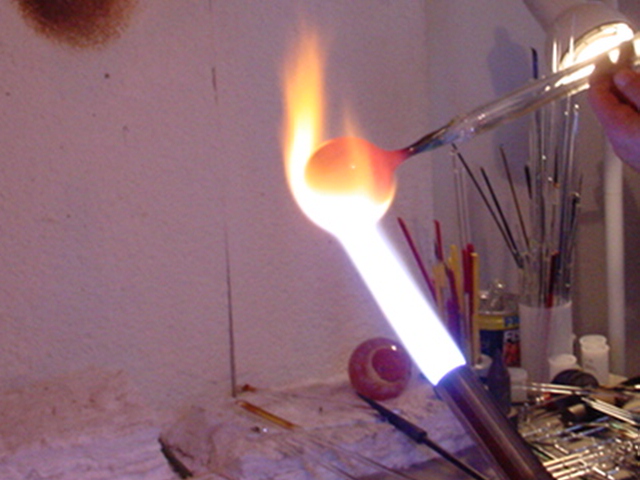
Heating in the torch after applying layers of glass to the end of a tube of glass.
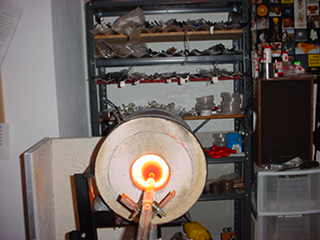
Heating in glory hole to even the heat in the glass so it blows out nice and round.
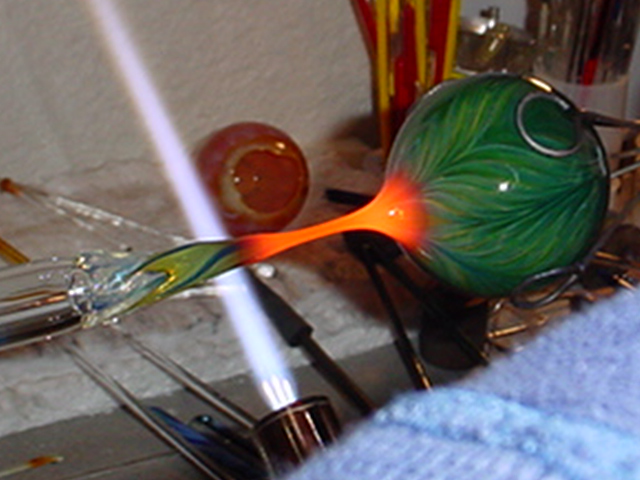
After blowing the ornament to size the top is pulled out to form the hook on the top of the ornament.
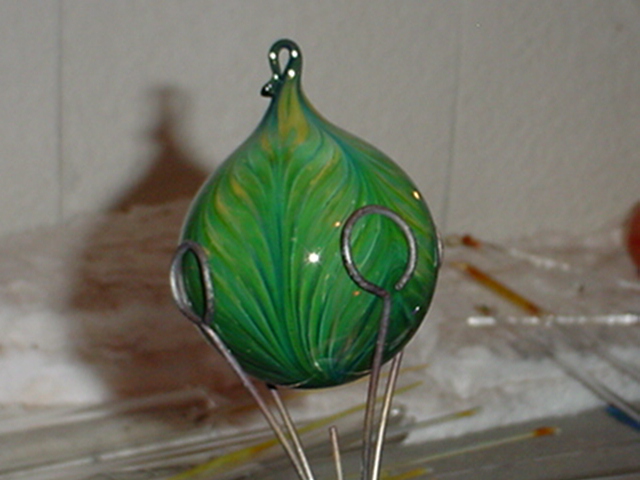
Completed ornament, ready to go into the kiln to be annealed.
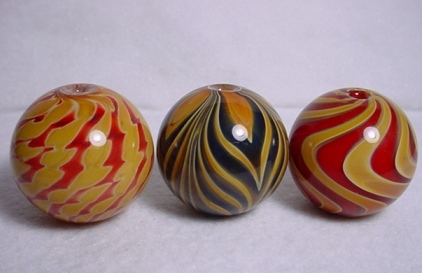
Blown beads: 1 1/2“ diameter, 1 1/4" and 1 1/2“ diameter. The never ending creative and technical challenges of working with glass continues to inspire me.
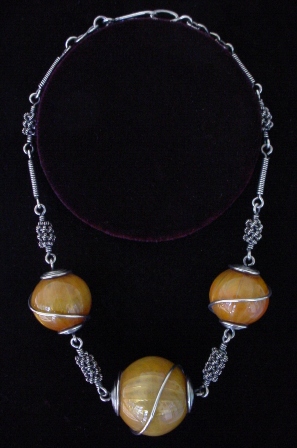
Since my college days I had always wanted to learn to make wire beads and jewelry. Some thirty years later I attended a basic wire bead making class in San Diego taught by Lynne Merchant. This skill has enabled me to combine silver wire with my large, hollow, blown beads to create jewelry pieces. I continued to visit southern California on a regular basis to hike in the Anza Borrego desert. I carried my small tool bag and silver wire on my many solitary hikes in the desert. It was the perfect environment, quiet and hot, for me to create wire componenets for my jewelry pieces.
I was a juried exhibitor for 15 years at the Bergstrom-Mahler Museum Summer Art Fair (home of the largest representative paperweight collection in the world). In 2001 I was honored with the “Best of Show” award and in 2003 placed first in the 3-dimensional art category. I am a member of the Paperweight Collectors Association (www.paperweight.org). Marcie and I are members of the Portland Button Club, Oregon State Button Society (www.oregonbuttonsociety.org), the National Button Society (www.nationalbuttonsociety.org), and the Portland Bead Society (www.beadport.com). My work has been displayed at a number of galleries and museums in Wisconsin, Colorado, California, Minnesota, New York, Oregon, and Japan. At various times my work has been sold throughout the United States by a number of artist representatives. My pieces are in collections throughout the US, Scandinavia, Europe, South America, Japan and China. Paul Stankard
© 2011 Hanson Stone. All rights reserved. |
 |
 |
||
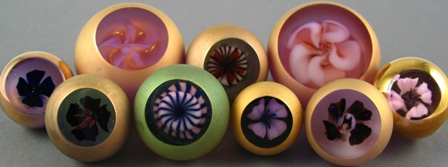
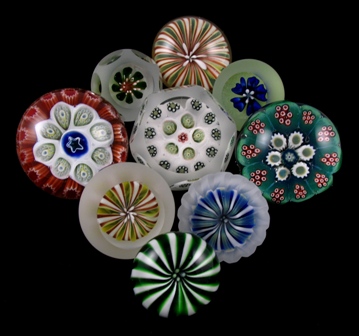
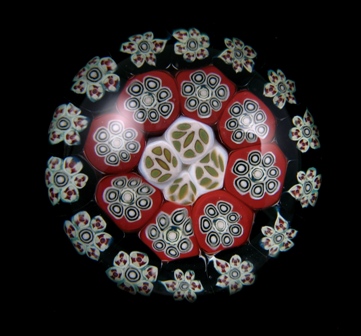
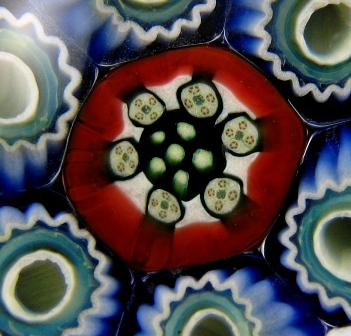
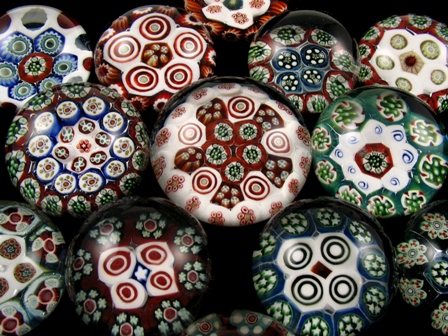 This led me to develop my own methods and style of making paperweights. While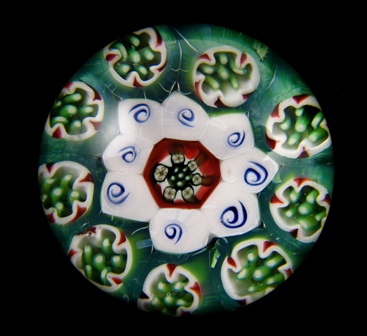



| Site Map |